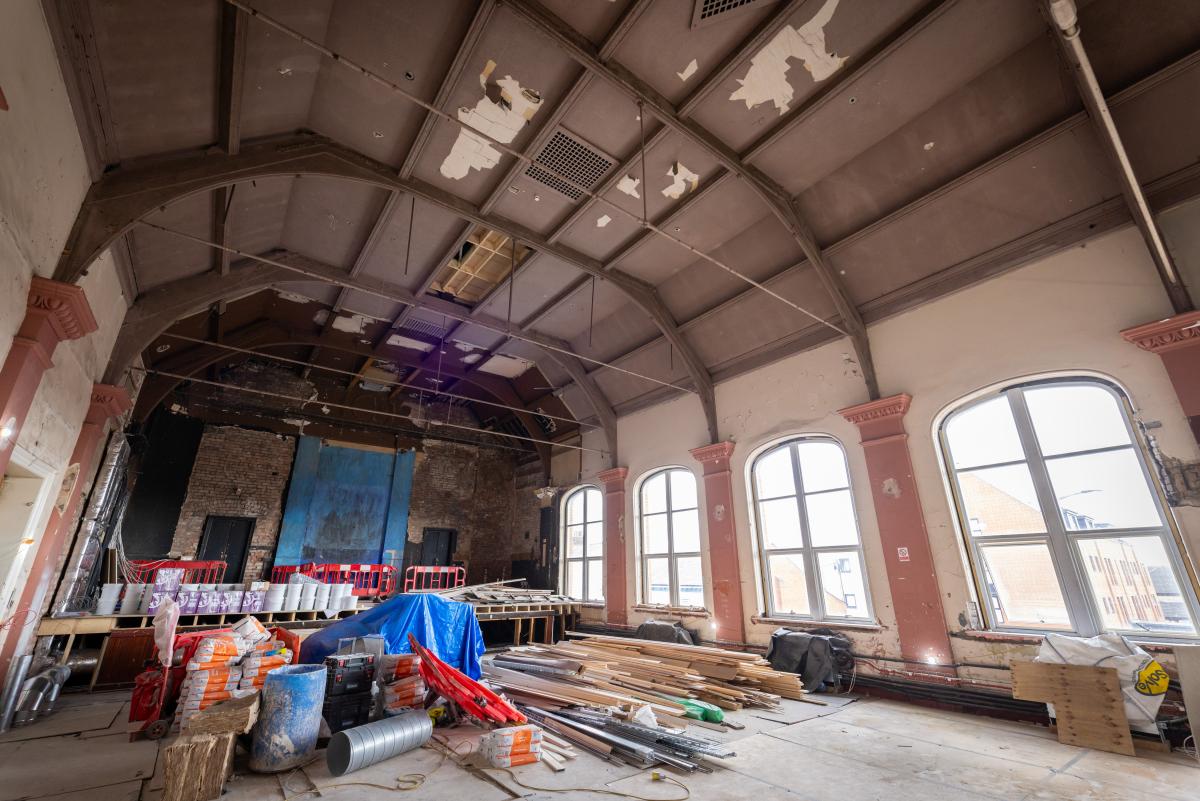
The restoration project is one of the most complex currently underway in the North West of England, where exacting heritage protection requirements have meant bringing together trades and techniques that are seldom called upon in modern town centre building projects.
Main contractor HH Smith & Sons says one of the most deceptively challenging elements of the restoration is plastering the ceilings and walls. The process must replicate exactly the materials and techniques used when the building was first constructed. Surfaces must be carefully prepared before any plaster is applied, both to protect them and to prevent cracking.
The project team are working with lime plaster, a material rarely used in modern construction. They must precisely match the chemical profile of the building’s existing plaster before reproducing it at scale. Any inconsistency in composition could cause old and new plaster to expand and contract at different rates, risking structural damage, so accuracy at every stage is critical.
While lime plaster may seem a relic of the past, it is quietly addressing a very modern challenge. Through a natural chemical process known as carbonation, it absorbs CO2 from the atmosphere, effectively locking it into the fabric of the building and contributing to Earlestown’s broader climate goals.
The Earlestown Town Hall project forms part of a long-term regeneration programme being delivered by St Helens Borough Council and ECF - a partnership between Homes England, L&G and Muse - backed by £20 million from the government's Levelling Up Fund and £8 million in match funding from St Helens Borough Council. A further £1.1 million from the Public Sector Decarbonisation Scheme will replace the building’s heating and lighting with sustainable, cost-effective systems.
The restored Town Hall will house a mixed-use performance and events space, flexible co-working and community facilities , plus a new courtyard garden with café.
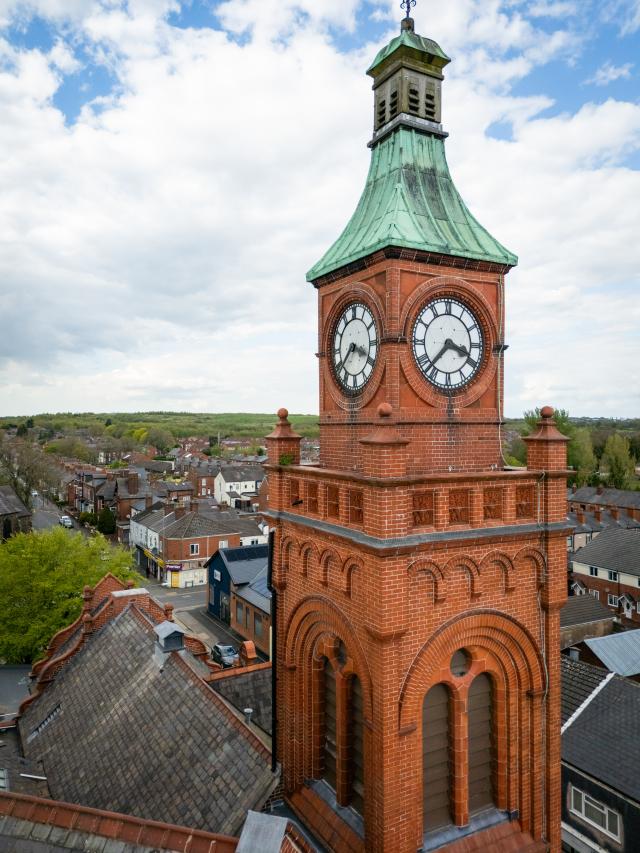
On the exterior, the restoration has been no less exacting. Perfect replicas of the original wooden penthouse louvres - the roof turrets used for ventilation - were crafted entirely by hand, then carefully lifted into position by crane.
High above, the bells of Earlestown’s iconic five-stage clock tower have also been receiving specialist attention. The clock and bells were originally produced by Messrs Potts & Sons, and their distinctive chimes have long been part of the rhythm of local life. The project team brought in specialist horologists from The Cumbria Clock Company - the same team behind the celebrated restoration of Big Ben’s bells and clockwork - to reinstall the fully overhauled mechanism, complete with a series of new upgrades.
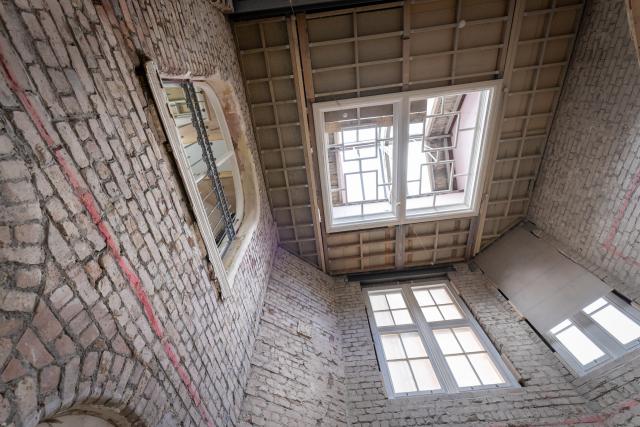
The project has also embraced cutting-edge technology alongside these traditional trades. A high-precision survey using 3D laser scanning captured millions of data points inside the building, mapping the historic structure into a detailed digital model. This was used to verify that a new heating system being installed on one of the upper floors would fit the available space precisely, without disturbing the historic architecture.
Mike Smith, Project Manager at HH Smith & Sons, said:
"Every day on this site is a lesson in precision. Whether we are chemically matching Victorian plaster or using 3D scans to map the building's exact structure, we are working to ensure this hall stands proud for another century. It's particularly rewarding to see our apprentices getting the opportunity to learn so many skills. They are a bridge between the builders of 1892 and modern tradespeople today.”
Lisa Harris, Executive Director of Place, St Helens Borough Council said:
“This project is central to our long-term vision for Earlestown. We are not simply restoring a building. We are investing in the future of the town centre, creating a space where communities can gather and Earlestown’s proud history can be celebrated. The skill and dedication going into every element of this restoration reflects exactly what this town deserves.”
Matt Whiteley, Senior Development Manager at ECF, added:
“This project is giving the Town Hall back to local people as a focal point that fit for the 21st century. By combining heritage skills with modern technology, we’re creating a hub for Earlestown that residents can enjoy and become part of the fabric of community life.”
Andy Balmer, Associate, Buttress Architects said:
"We are delighted to be involved in the restoration and retrofit of Earlestown Town Hall, originally built in 1892-93. This building holds many happy memories for the people of Earlestown, and it is a privilege to support the Council and ECF in bringing it back to life. Our approach draws on our expertise in historic buildings, carefully balancing preservation with the demands of a sustainable future. We have focused on retaining as much of the original character as possible, while also uncovering features that had been hidden over time, such as the central staircase. Through this retrofit, we are ensuring the building is not only restored but also equipped to serve future generations. It belongs to the community, and its revival will play a central role in the continued success of Earlestown."
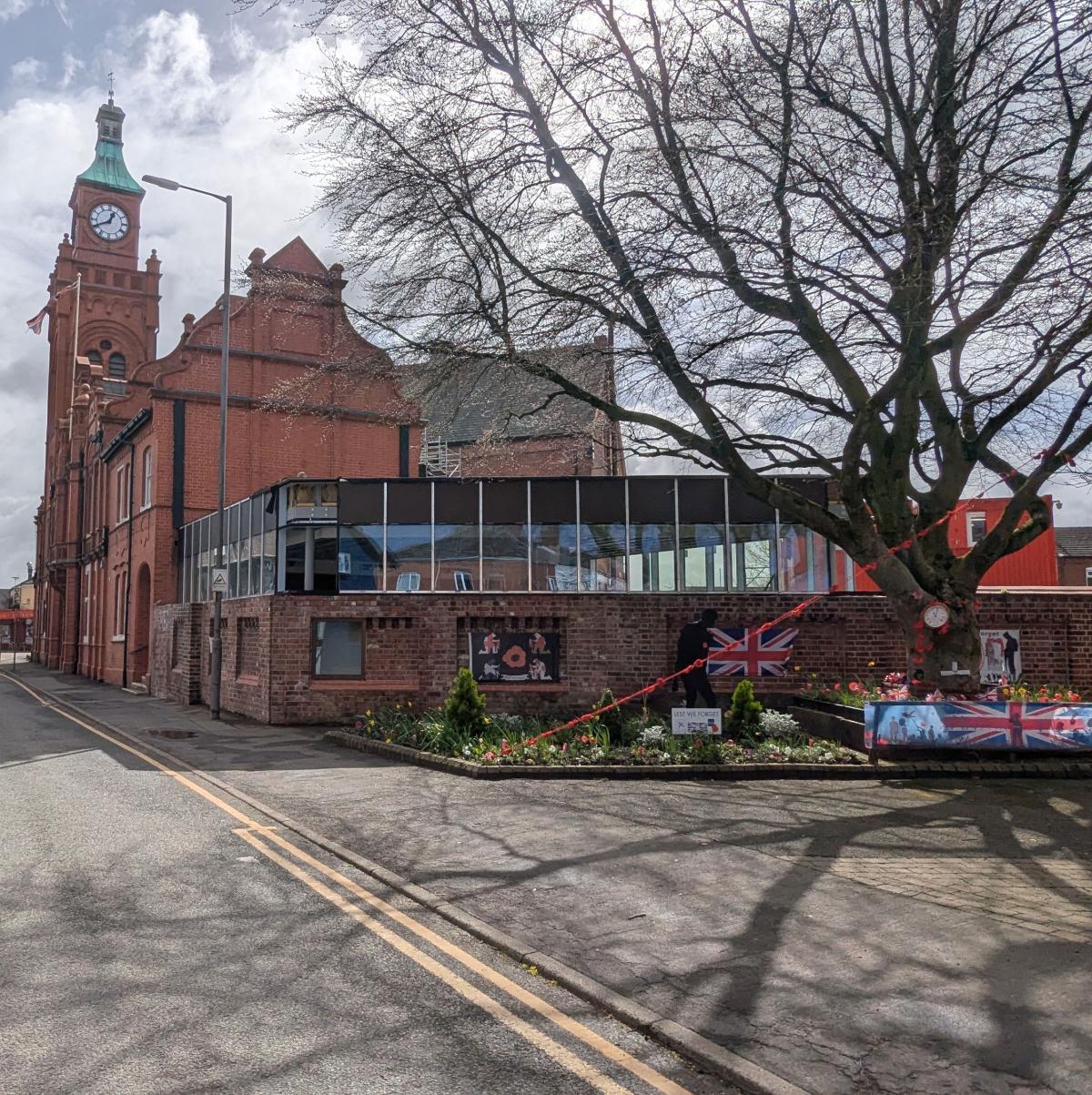
The Town Hall has a rich and colourful history. Designed by local architect Thomas Beesley following a public competition, it was constructed between 1892 and 1893 by Messrs R Neill & Sons of Manchester at a cost of £10,200.
Built in an eclectic Queen Anne style with Flemish influences, the two-storey red brick building features slate roofs, an attic and a basement. It is thought the cost of the hall may have been gifted to the community by William John Legh - the local lord of the manor - to mark his elevation to the peerage as Lord Newton in 1892, though the designs had already been commissioned the previous year.
Darren Robinson, St Helens Council, ECF and Buttress.