Over the past decade, Salford has seen a steady rise in homelessness – from people sleeping on the streets to those between accommodation. The move-on homes programme was created by Salford City Council as a direct and compassionate response, providing move-on homes for those experiencing or at risk of homelessness and stable bases for these residents to rebuild their lives.
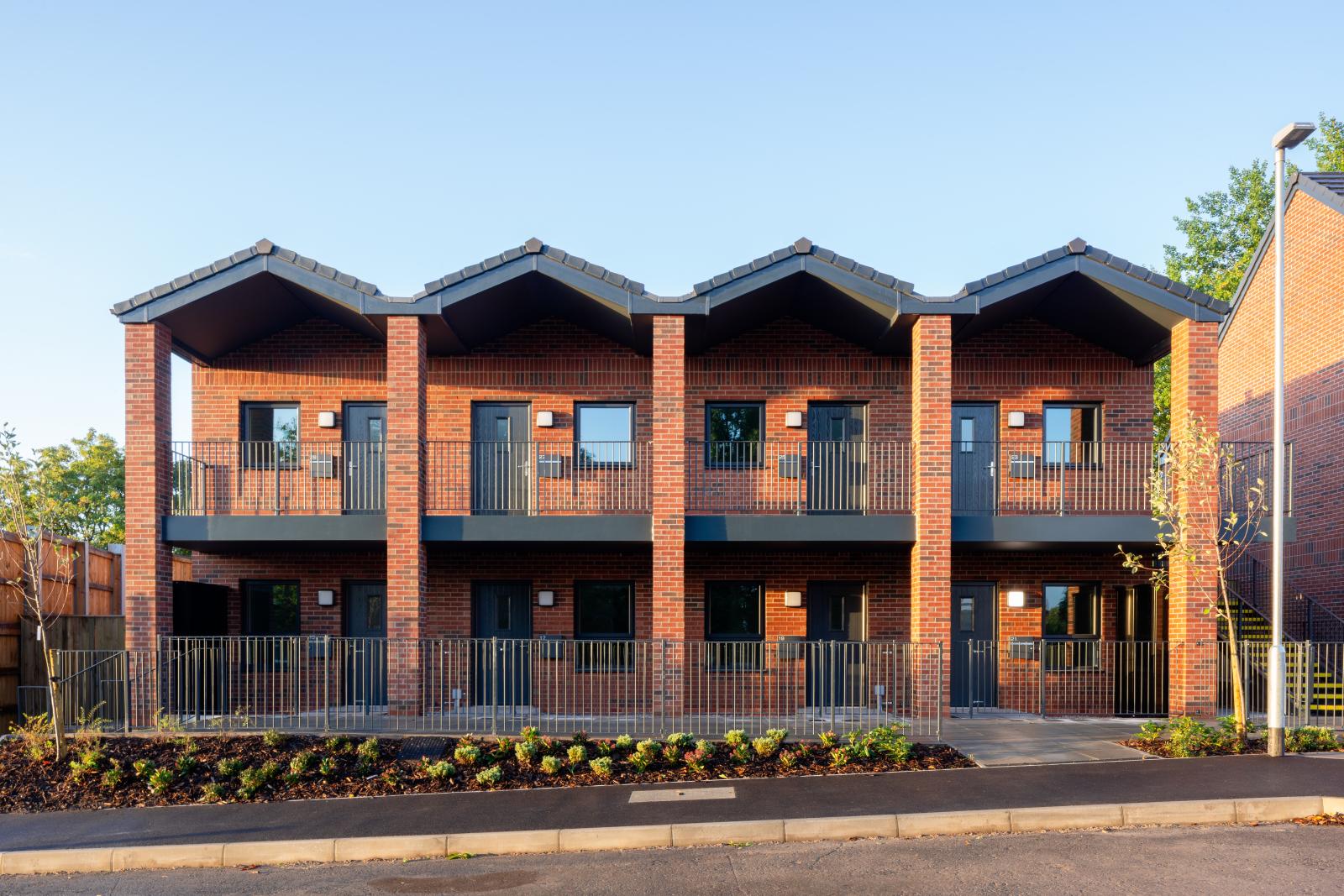
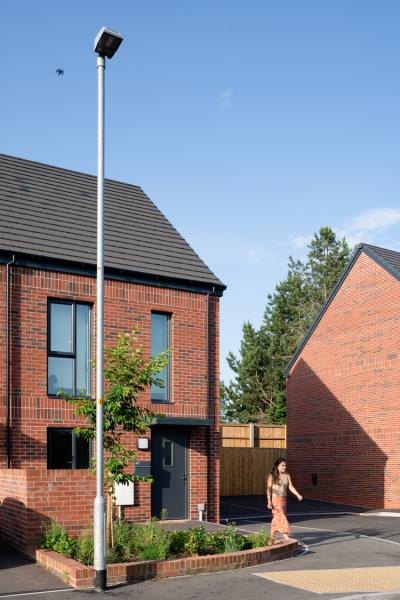
Our team worked closely with Salford City Council, local support organisations and residents to ensure every aspect of the scheme responded to emotional and practical needs that might arise. The end result was 16 move-on apartments and 19 affordable family homes across two sites in Salford. Together, they form a key part of Salford City Council’s strategy to reduce homelessness.
The scheme aims to create a genuine home that will prepare occupants for full independent living.
Our work
The heart of the design brief was rooted in empathy and sensitivity. We worked closely with the council, project managers Identity Consult and local charity Loaves and Fishes to listen to the voices of those who had experienced homelessness.
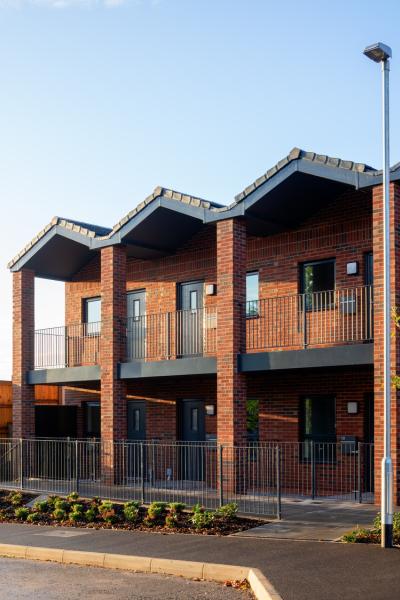
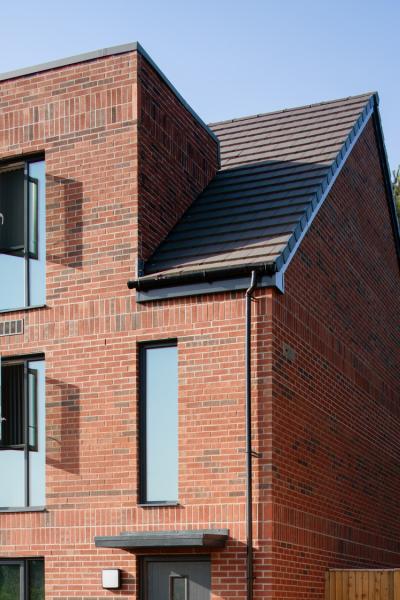
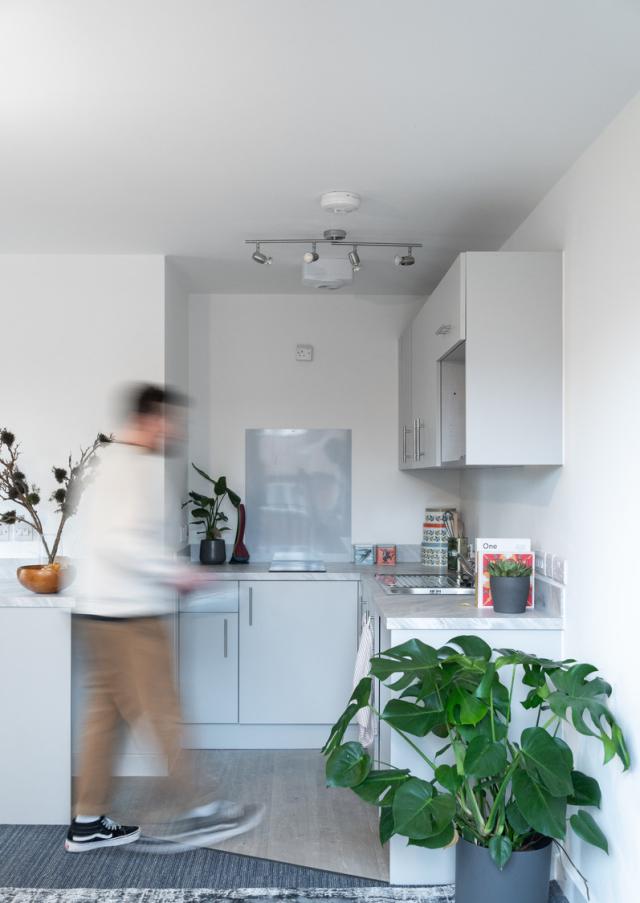
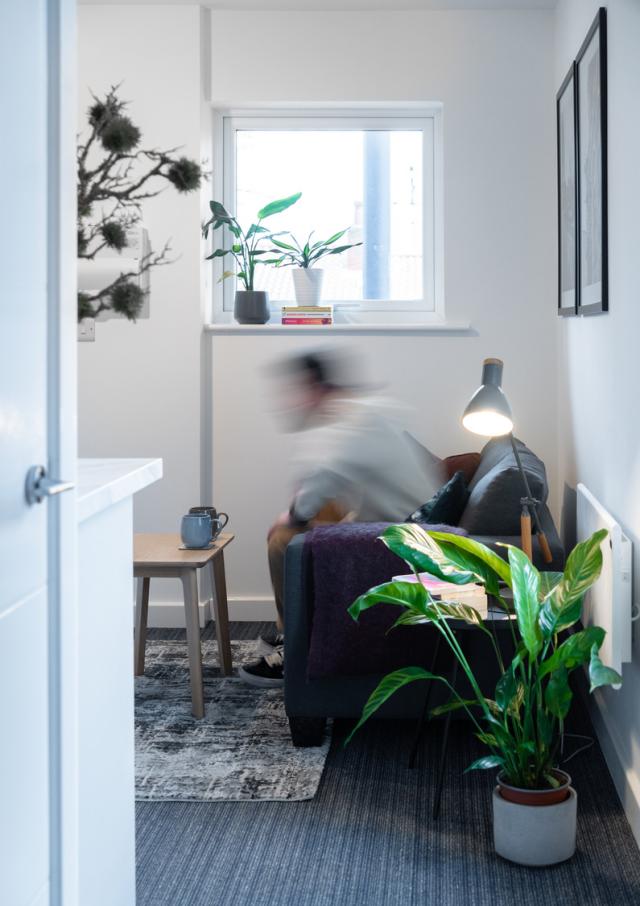
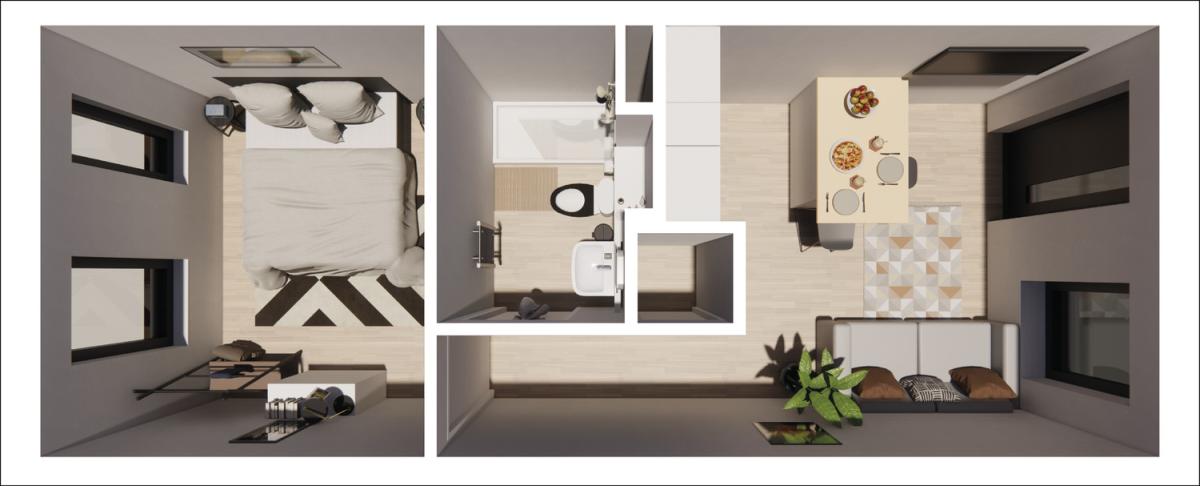
Each apartment is self-contained, with its own front door, natural light and an open plan living space to reflect the familiar elements of a traditional home. Each front door opens onto a shared deck and stairway to encourage a social connection between residents and to build a community of support. The size of the units were considered with ease of maintenance and upkeep in mind. Design decisions were shaped with purpose - to make residents feel like they belong. As well as making each apartment feel like a traditional home, they were designed to integrate into the existing neighbourhood. The pitched roofs and red-brick facade drew inspiration from the surrounding Salford terraces. This helps both current and new residents feel that the housing is part of the community, not just an add-on. One of the most important challenges was making the development feel architecturally and socially connected to the existing neighbourhood to remove the perceived divide between residents and neighbouring communities.
Outside of the design, site selection was also guided by social needs with proximity to transport links and local amenities - with the Eccles New Roads site positioned adjacent to a tram stop. This helps residents to easily access jobs and support networks as they rebuild their lives.
Working with the community
The greatest complexity lay not in technical delivery but in addressing the emotional and social needs of people who have experienced homelessness. To ensure the scheme genuinely responded to its future residents, Buttress and Salford City Council worked closely with local charity Loaves and Fishes, and with individuals with lived experience of rough sleeping.
The consultation presentations and feedback sessions allowed their voices to directly shape the outcome – influencing layout, material choices, privacy levels, and the inclusion of individual front doors. The scheme was shaped by the people it serves.

Sustainability in construction
Sustainability was integral from the outset. Salford City Council made a commitment to work towards achieving the Greater Manchester strategic framework local plan of delivering carbon-neutral new homes by 2028. The homes are low-energy and low-carbon, built to high thermal standards. This reduces running costs and is crucial in supporting a sustainable financial plan for Salford City Council.
Our team explored modern methods of construction, including volumetric modular approaches that could speed delivery and improve energy performance. Each unit shares a common footprint, allowing different housing layouts to be adapted across multiple sites without changing the wider masterplan.
"Another important element was to ensure that each unit had its own front door, which not only gave a sense of home but enabled the occupier to have a formal address and therefore a bank account and employment opportunities.”
Ben Tabiner, Buttress director
Looking forward
The move-on homes have been a success so far, providing support to those at risk of or currently homeless. At its heart, the programme redefines what social housing can be and provides a stable base for those most at need.
Manchester Property Awards 2026
Shortlisted Affordable Housing Project of the Year
2026 Northern Housing Awards
Supported/Sheltered Housing Scheme Winner
2023 Housing Design Awards
Shortlisted
2026 Inside Housing Awards
Social Housing Development of the Year Winner
Ben Tabiner
Ben is a director at Buttress who is experienced in the design and delivery of projects across a range of sectors, including residential, commercial and education.

Paul Wright
Paul is a skilled architect whose experience includes a broad range of residential, commercial and masterplanning projects.