Ancoats was once the heart of Manchester's manufacturing output during the height of the Industrial Revolution, but the area experienced a significant decline during the latter half of the 20th century.
Over the past decade, strategic regeneration has given the area a new lease of life, with the development of new residential housing and the establishment of a number of independent bars and restaurants to form a vibrant community. No.1 Ancoats Green is an integral part of this new development and wider Ancoats regeneration strategy. It creates a strong sense of place through its connection to the newly refurbished Ancoats Green, Ancoats Mobility Hub and surrounding public realm.
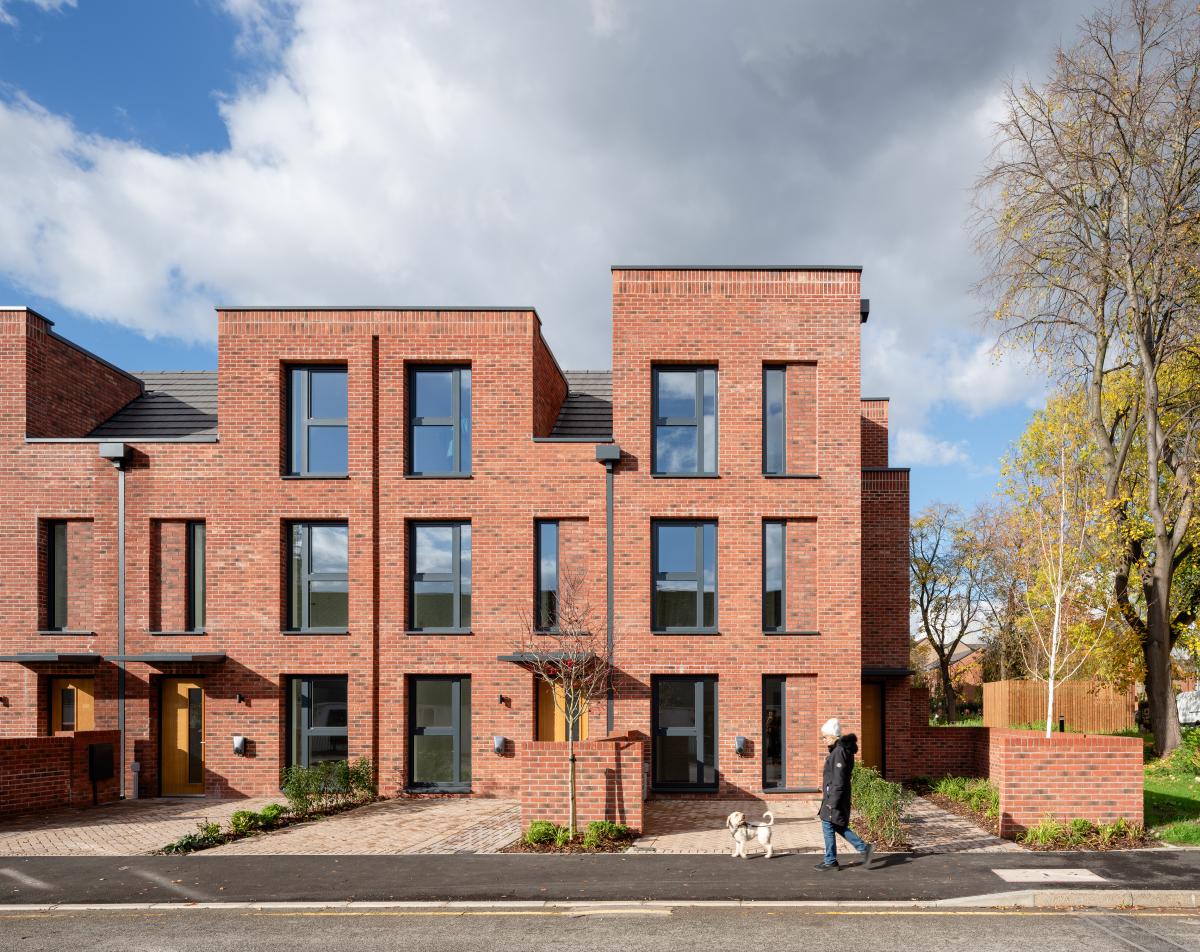
No.1 Ancoats Green (formerly known as Rodney Street) provides 129 high-quality and affordable homes, with 119 apartments and 10 townhouses. Designed as a mixed-tenure development, 30 percent of the homes are offered at Manchester Living Rent, capped at the government's Local Housing Allowance rate to ensure genuine affordability for residents on lower incomes.
30% of the homes are offered at Manchester Living Rent to allow genuine affordability for residents.
Sustainability first
Sustainability and environmental performance underpin the entire scheme, with No.1 Ancoats Green. The project was designed to meet AECB (Association for Environment Conscious Building) award standards, demonstrating a commitment to low-energy principles, and is, to date, the largest AECB-accredited scheme.
The design delivers AECB performance while maintaining architectural integrity and a cost-effective build strategy, reinforcing Manchester's ambition for low-carbon, resilient housing. The development contributes to Manchester's 2038 roadmap through high levels of thermal efficiency and airtightness, well-insulated building fabric, and provision for electric vehicle charging in the nearby Ancoats Mobility Hub.
Alongside Ancoats Mobility Hub, greener transport options are encouraged throughout, with the provision of secure cycle storage, direct links to new and existing cycle routes, and the development's proximity to city centre public transport links.
Designing in context
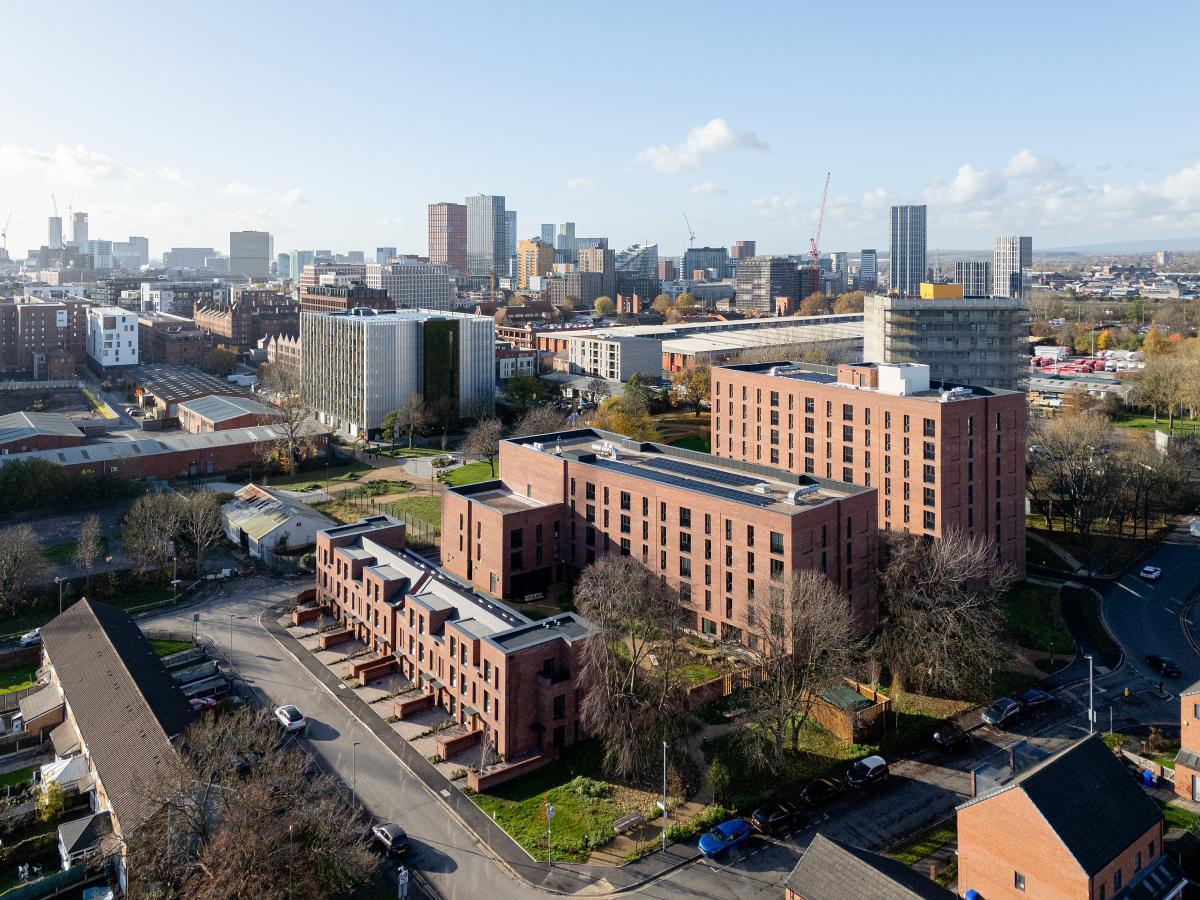
A key design aim was to connect the development to the surrounding neighbourhoods and provide connectivity between Ancoats, New Islington and Miles Platting.
Architecturally, the development responds sensitively to its context through a carefully selected red brick palette referencing Ancoats’ industrial heritage. The design also reinterprets historic street patterns to strengthen local character and connectivity between Ancoats and Miles Platting.
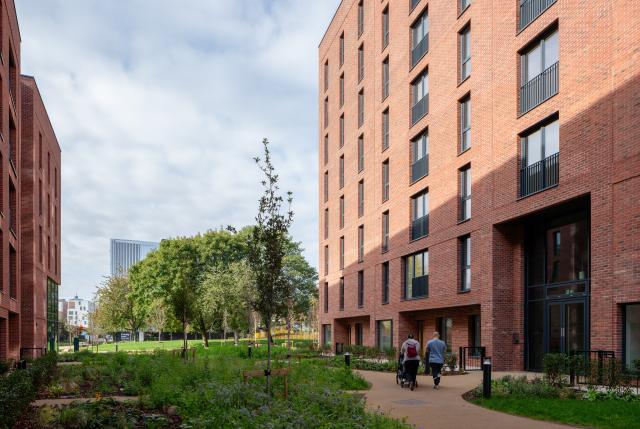
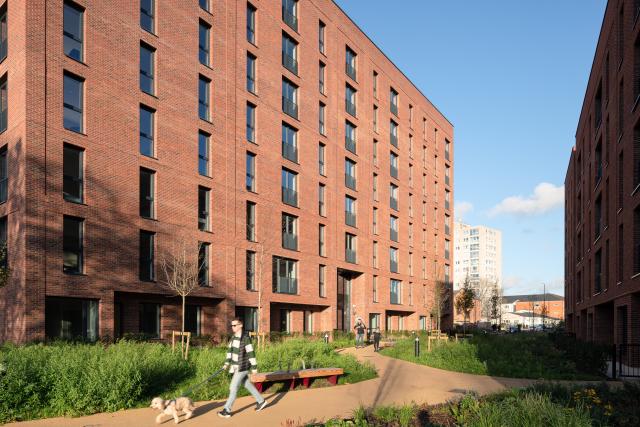
The apartment blocks are arranged on either side of a new green street, creating a strong connection across the site, and encouraging community interaction and wellbeing through a pedestrian-friendly layout.
An extensive landscape scheme and significant number of new trees will also be planted as part of the placemaking public realm works, which complements a wider public realm strategy. This strategy looks to make Ancoats a low-carbon, sustainable neighbourhood with a focus on active transport routes.
Manchester Property Awards 2026
Shortlisted Residential Project of the Year
North West Residential Property Awards
Build to Rent Development of the Year (2025), Winner
North West Regional Construction Awards
Residential Project of the Year (2026), Winner
Photography credits
Gavin Stewart

Ben Tabiner
Ben is a director at Buttress who is experienced in the design and delivery of projects across a range of sectors, including residential, commercial and education.

Sebastian Drayson
Seb is an associate with experience across a range of sectors, predominantly in the delivery of large, high-quality schemes within the residential and student residential sectors.
At Buttress, he is currently supporting the development of an affordable housing scheme in Ancoats, Manchester.