Heritage
Fire Damage
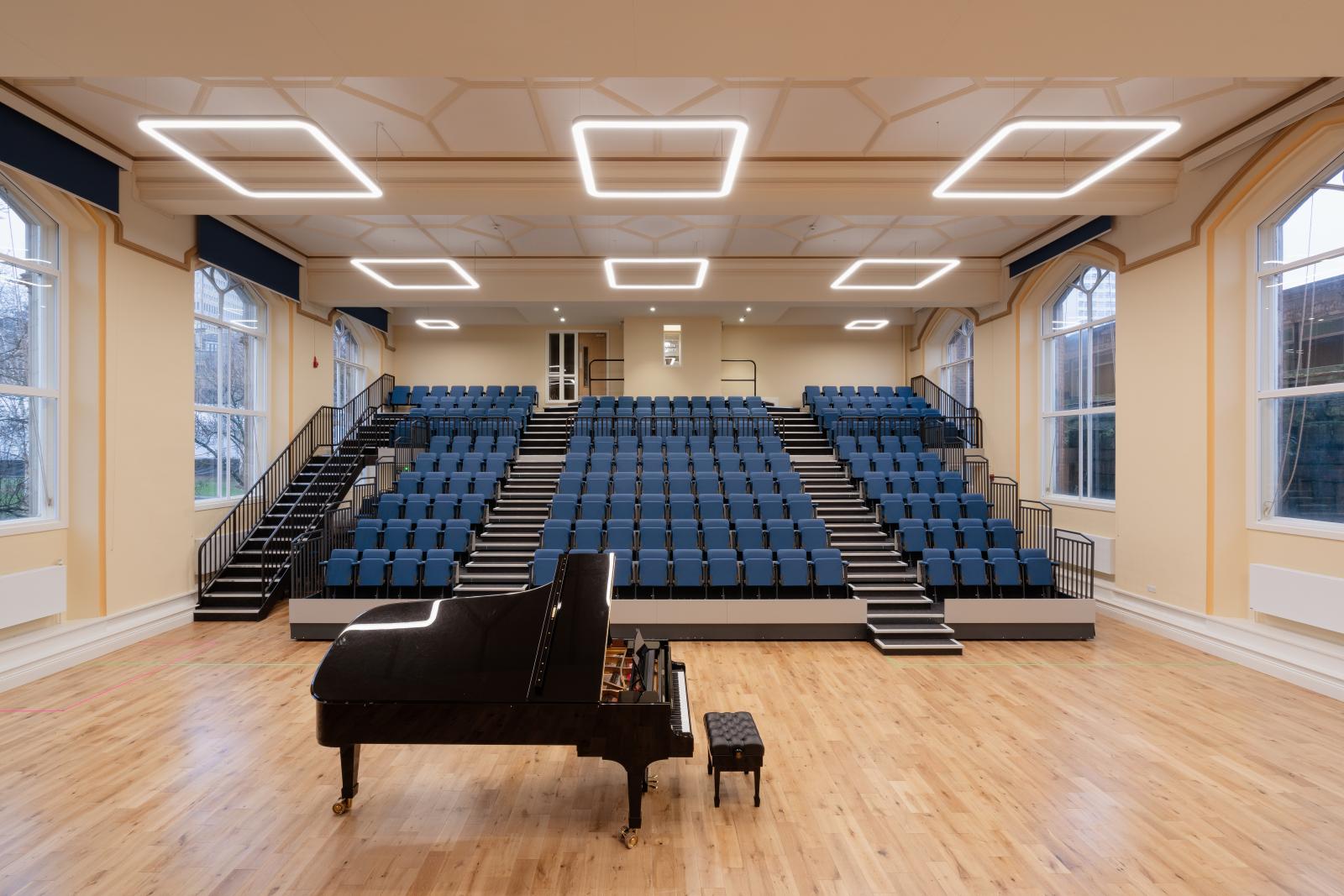
Chetham's School of Music is a cornerstone of Manchester's music and cultural heritage.
Its origins reach back to 1421, when the site first housed priests serving the former medieval church that became Manchester Cathedral. Over the centuries, the buildings evolved into a school and a free library.
Today, Chetham's hosts over 300 young musicians within its historic buildings and is a significant part of Manchester's rich history. Buttress was appointed to provide specialist conservation advice to support the reinstatement of the fire-damaged historic interior and enable its return to daily school life. The result is a revitalised space that has new capabilities but still reflects the school's purpose and history. The work was not just to restore a room, but an important part of school life.
Our work at Whiteley Hall
Whiteley Hall sits within the Grade II listed Millgate Building and is one of the school's principal social and performance spaces. Originally designed in 1869 as part of Manchester Grammar School, the building later became an integral part of Chetham's multi-building campus. In 2021, a devastating fire caused severe damage to the hall's mezzanine, interior finishes, and historic fabric.
Although no-one was injured, the incident deeply impacted the school community and removed a much-loved hub for collaboration and everyday life.
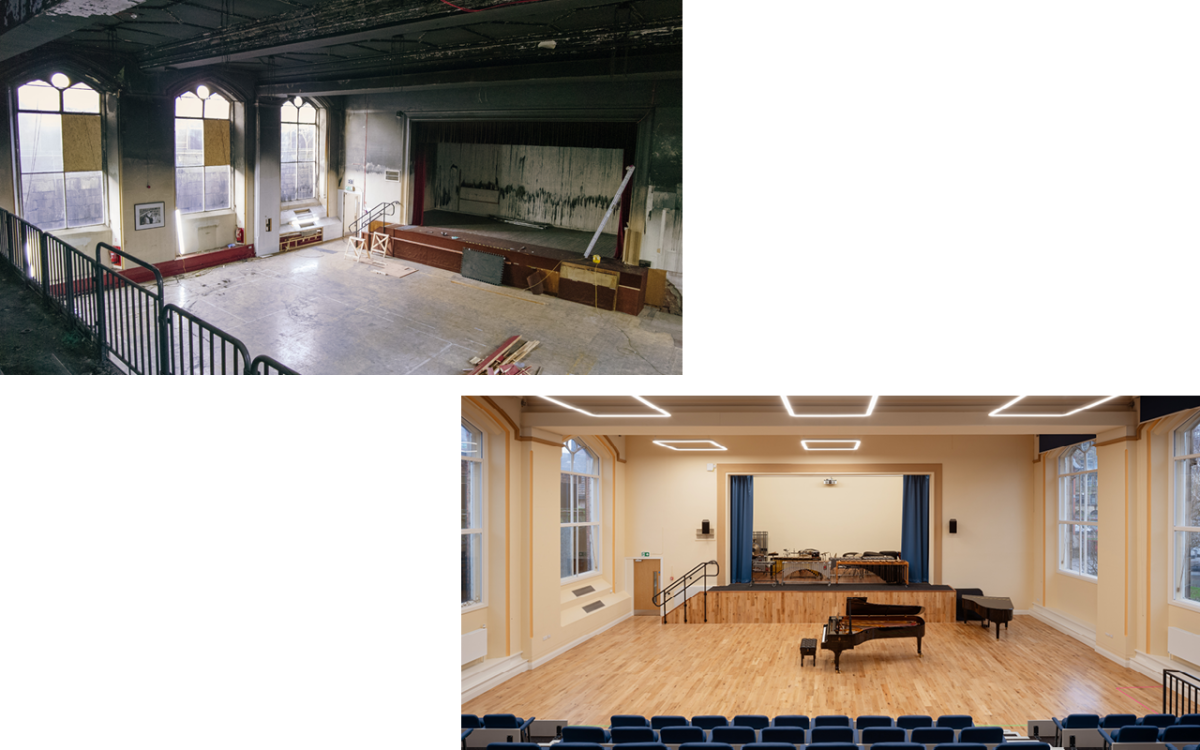
Our work began with an understanding that post-fire restoration in an educational setting requires care on multiple levels. The fabric of the hall needed sensitive repair, but just as importantly, its atmosphere, acoustic qualities and sense of familiarity had to be preserved. Whiteley Hall is not a static historic room; it is an active space that supports how young musicians learn, practise and perform.
A detailed assessment of the fire-damaged fabric allowed clear distinctions to be made between what could be retained, what could be repaired, and what had been lost. Decisions were guided by historic research, careful recording and material analysis, ensuring that reinstatement was rooted in evidence rather than assumption. Wherever possible, original fabric was conserved, reflecting a fabric-first approach that supports both heritage value and long-term sustainability.
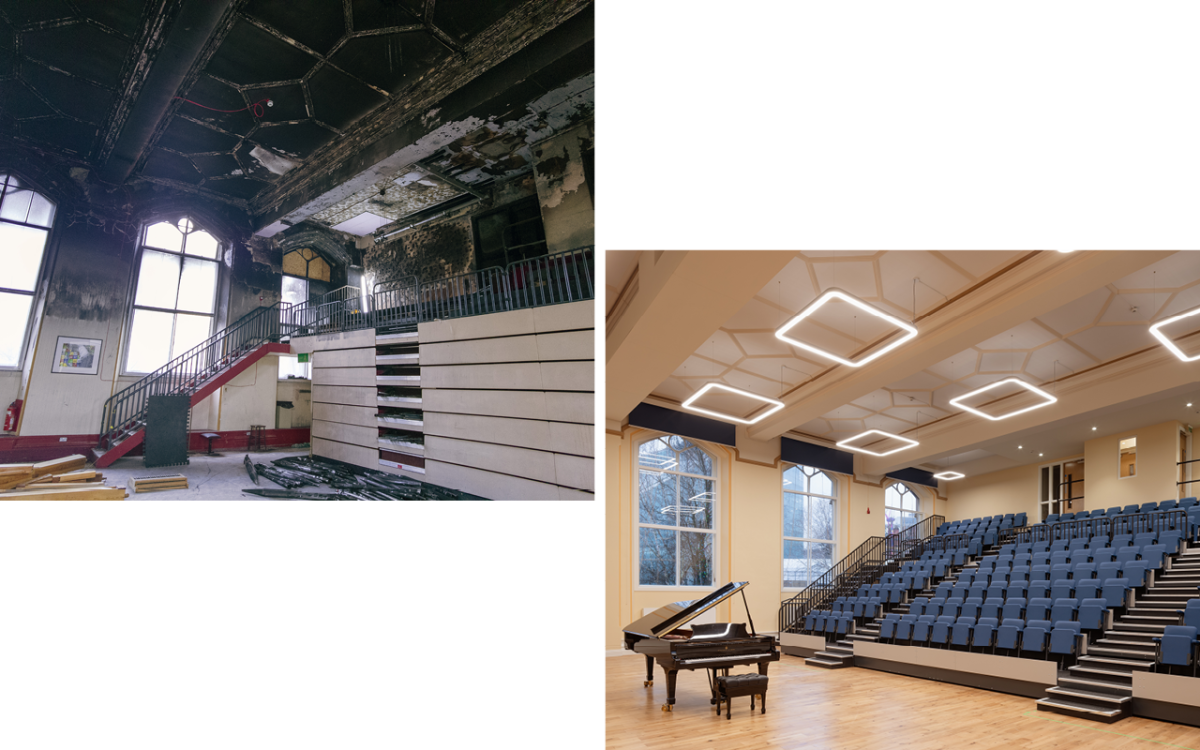
Working closely with conservation specialists, craftspeople and fire safety consultants, damaged elements were stabilised and lost features thoughtfully reinstated. Fire-damaged 20th-century plywood was replaced with engineered oak flooring designed to sit comfortably within the historic interior, while traditional mouldings were carefully re-formed to reinstate original proportions and detail. Where plasterwork had been lost, reconstruction was informed by meticulous analysis of surviving material to ensure continuity across walls, ceilings and joinery.
Our work at Chetham's was underpinned by conservation principles rooted in care, continuity and stewardship. We aim not only to preserve the past but to ensure the building remains relevant and resilient.
Retain and repair
We prioritised the retention of the original historic fabrics wherever possible. The team replaced the fire-damaged 20th-century plywood with a new engineered oak flooring, designed to complement the hall's historic character, and traditional mouldings to reinstate the original forms. The project embodies a fabric‑first, low‑carbon approach to heritage repair. Retaining original material significantly reduces embodied carbon, and lime-based materials and breathable construction methods support the building's long-term maintenance.
Careful reconstruction
Where loss had occurred in damaged plaster, reinstatement was guided by meticulous recording and analysis of the surviving historic material. This ensured visual continuity and historical authenticity across wall, ceiling and joinery elements. We cleaned and redecorated the original windows with new sympathetic glazing designed to respect the building's historic materials.
Modern enhancements
Modern interventions were introduced discreetly to support long‑term resilience. Each enhancement was rationalised to minimise the impact on the historic fabric. Fire protection was improved through integrated fire and flood-resistant materials to futureproof and protect the building. Acoustic performance, lighting and retractable seating were upgraded to support educational needs and public performances. Retractable seating, as a 20th-century addition, was also carefully removed and replaced with a new system following extensive fire damage.

Continuing the heritage story
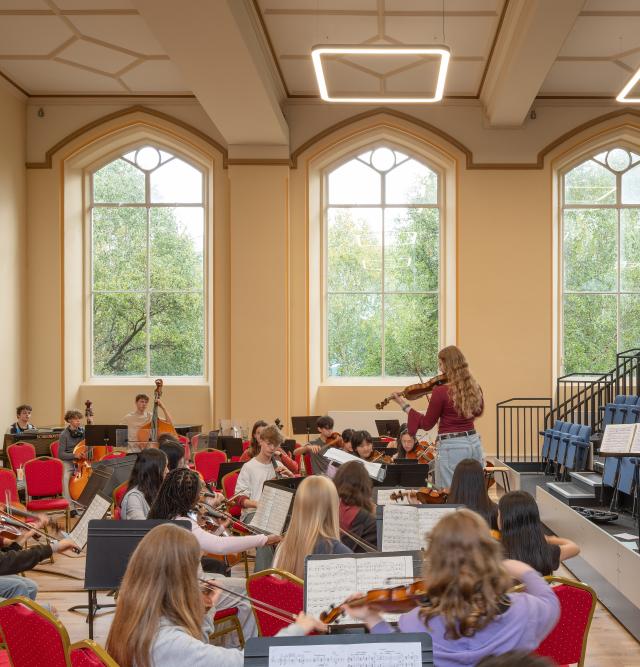
Throughout the project, we worked closely alongside Chetham's team to ensure every decision supported the long-term wellbeing of the school and building. Phasing, access and minimal disruption were carefully coordinated with the school community to allow the careful repairs to take place alongside daily life. The completion of Whiteley Hall marks another step in our relationship with the school.
The rest of our works now continue across various other sites, including the refurbishment and refreshment of Milgate Boarding, College House, and the Palatine building.
The restored Whiteley Hall now reads as a coherent whole once again. Its architectural character is clear, its atmosphere calm and purposeful, and its role as a key performance and social space securely reinstated. For students, it provides a dependable and dignified setting that reflects the seriousness of their education and craft. For the school, it demonstrates how careful conservation can support continuity, resilience and daily use.
We view conservation as an ongoing process of care and continuity. Our work at Chetham's reflects a deep respect for the past while ensuring continued use in the future.
Our work at Chetham's is not a single act, but an ongoing conversation that guides each part of our work across the site.

Edward Kepczyk
Edward specialises in the conservation, informed repair, and creative reuse of secular and ecclesiastical buildings, including some of the country’s most significant historic sites.

Steve Kendall
Steve is an experienced senior architect with a history of designing and delivering buildings across a broad range of sectors.