Heritage Consultancy
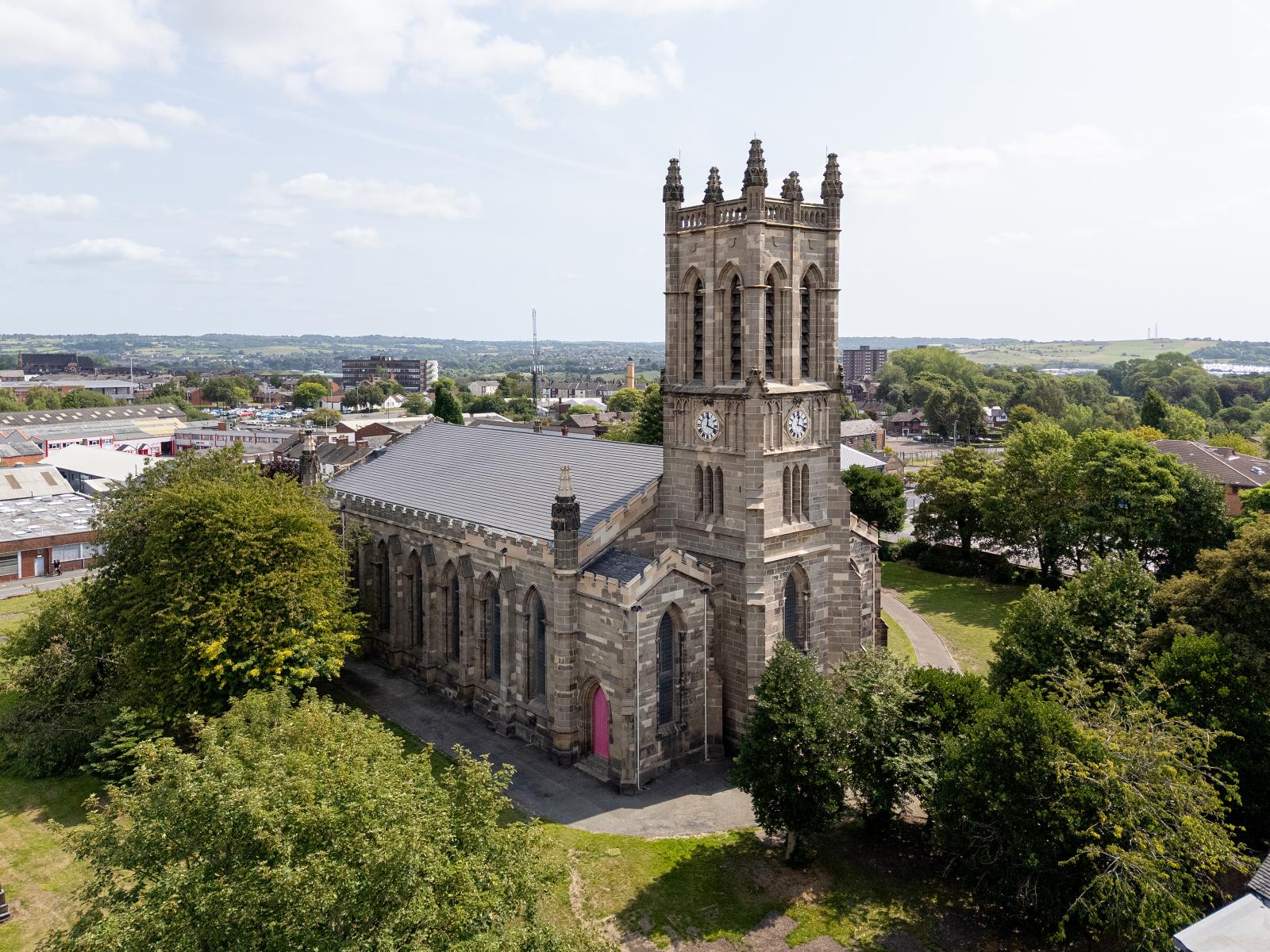
St Mark's, Shelton, is a Grade II listed Commissioners' Church, built in 1834 at the height of Stoke-on-Trent's pottery industry. Designed by John Oates, it was one of 600 churches funded by parliamentary grants to serve a fast-growing industrial town.
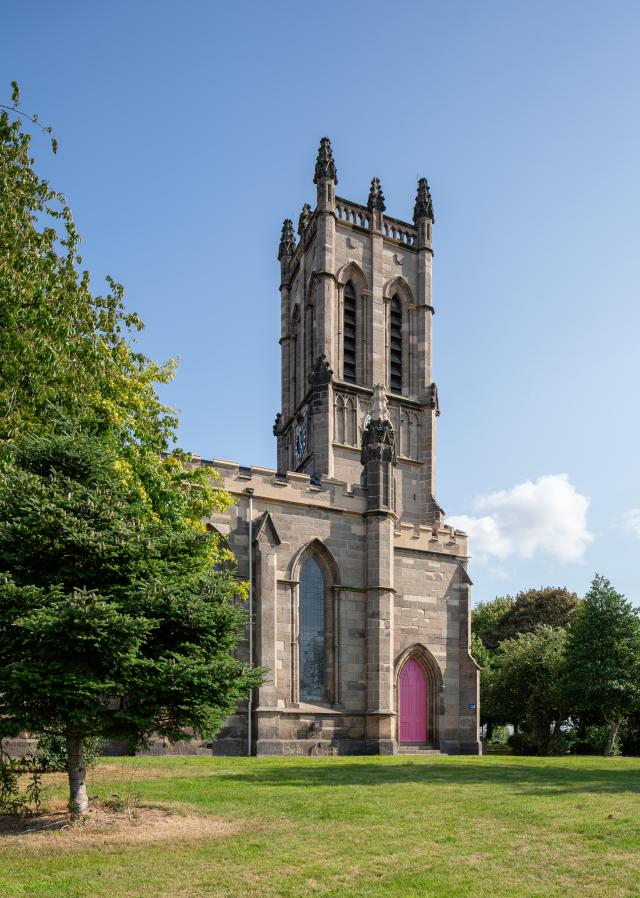
The building is known for its Gothic design and scale - the largest parish church in the Lichfield Diocese after the Cathedral, its Gothic tower becoming a beacon in the pottery town.
For nearly two centuries, St Mark's stood as a visual and cultural landmark. However, time, weather and underinvestment in the church left St Mark’s vulnerable. Water penetrated failing roofs; plaster loosened and fell; masonry became unsafe. Parts of the building were closed, and in 2023, St Mark’s was added to the Heritage at Risk Register. Without urgent repair and a long-term plan, the future of the remarkable church hung in the balance.
Our approach
St Mark's stands in one of Stoke's most deprived neighbourhoods. The church is more than a building, but a lifeline and social space, offering food, belonging and support. Protecting the church meant also protecting the community that depends on it.
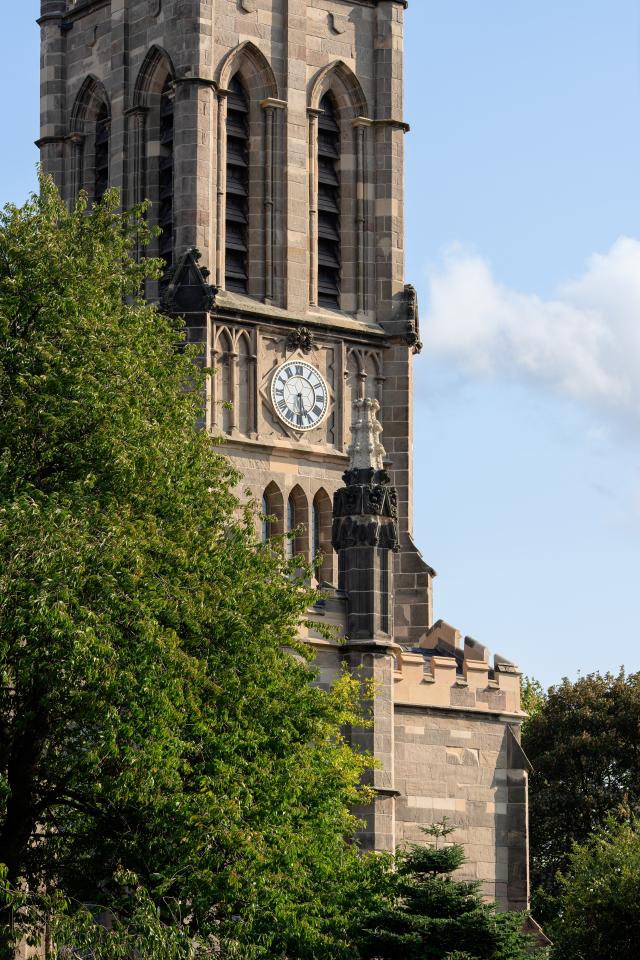
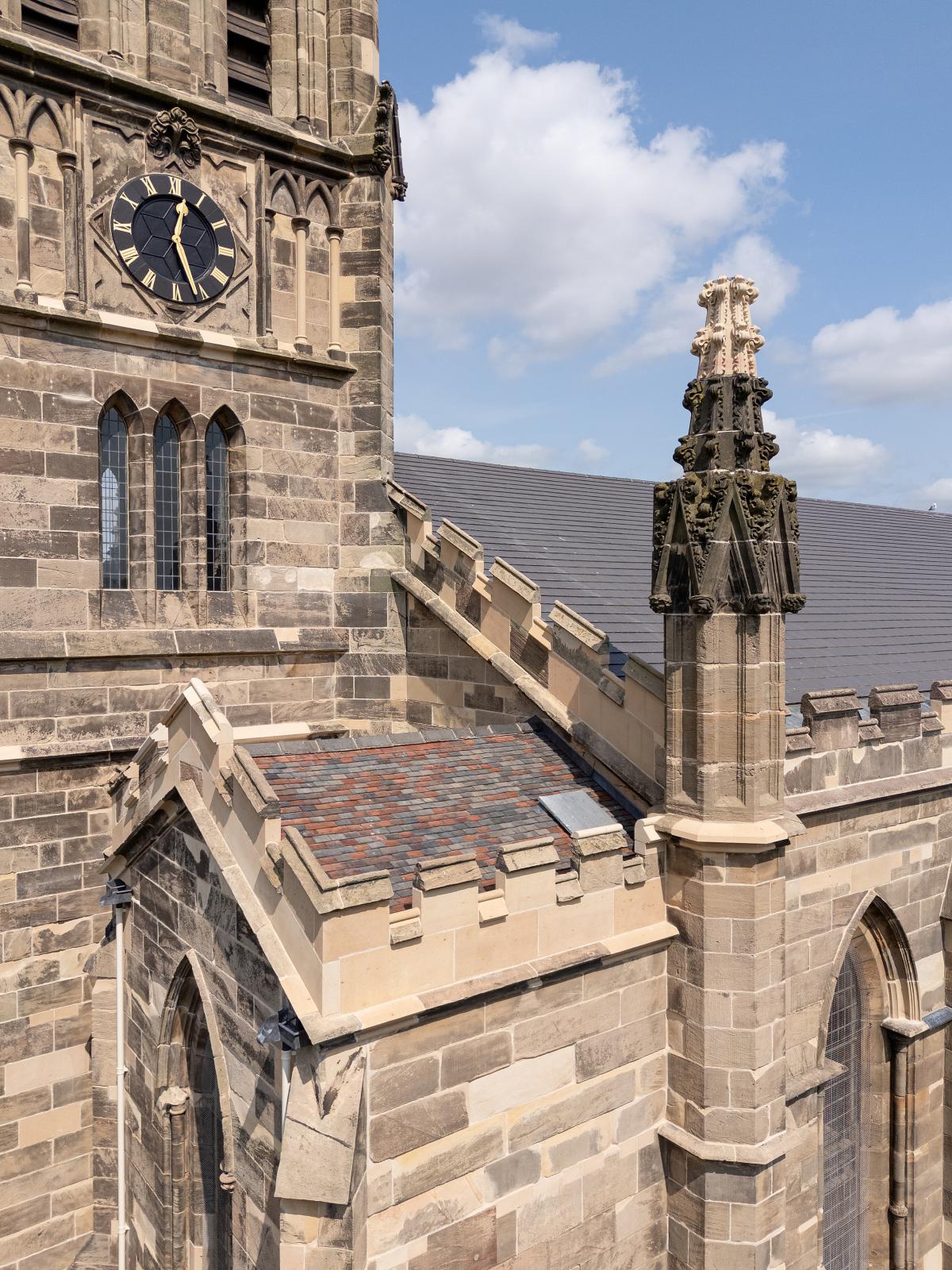
With support from the National Lottery Heritage Fund, our role was to stabilise the building, safeguard its fabric and make the church a community asset once more. Through the 'Under One Roof' project, we led a phased programme of inspection, repair and conservation. We addressed critical weaknesses in stone masonry, roof coverings, rainwater management, interior plaster and the iconic clock faces of St Mark's tower. All were essential to keep St Mark's watertight and structurally sound.
But conservation at St Mark's had to be led by a dynamic approach.We kept the authenticity of the original architecture while allowing the building to evolve and serve contemporary needs. The challenge was to work with as much original fabric as possible, employ traditional craft skills, and ensure every intervention helped secure the church for the long term, whie still meeting Historic England and National Lottery Heritage Fund requirements.
As the project neared completion, we reviewed and updated the management and maintenance plan, ensuring there was a clear framework in place for future care.
Understanding heritage significance
Our heritage consultancy team prepared a detailed Statement of Significance, capturing not just the architectural importance of the site, but also its human history. From industrial growth and migration to its present role as a pillar of community life. The understanding shaped every action, ensuring our work didn't just preserve but also provided meaning for every conservation decision.
Opening the doors to its people
Crucial to the project was ensuring that conservation didn't happen to the community but with them. Tours, talks and hands-on engagements invited the local community in to share their stories and culture. We involved local people, schools, and groups who might not normally engage with historic buildings, to ensure that we were getting a varied perspective of the project.
We used 3D modelling and virtual reality to welcome new audiences - helping individuals step inside a digital version of St Mark's, understand its construction, and see the work unfold. This technology helped demystify heritage skills and inspired local ownership.
"This project was about more than conservation. It was about restoring pride, safeguarding belonging, and returning St Mark's to its people - not as a relic of the past, but as a catalyst for the future."
Edward Kepczyk, Buttress director
Looking forward
For almost 200 years, St Mark’s has shaped community identity in Shelton.
With its structure secured and a long-term maintenance plan in place, St Mark’s can now look outward again. Its future is one of active cultural, social and spiritual life. The building stands not as an artefact, but as a living asset, rooted in history and working for future use.
Photography credits
Gavin Stewart

Edward Kepczyk
Edward specialises in the conservation, informed repair, and creative reuse of secular and ecclesiastical buildings, including some of the country’s most significant historic sites.

Cameron Hawkins
Cameron works on a number of significant historic building projects in the practice, alongside leading the work experience programme within the Manchester studio.
Cameron is particularly interested in sustainable design and environmental policy. During his master’s degree, he produced a thesis critically examining the global race to net zero at all scales of enquiry.

Jenna Johnston
Jenna leads the Heritage Consultancy team supporting clients to deliver projects with historic environment considerations.